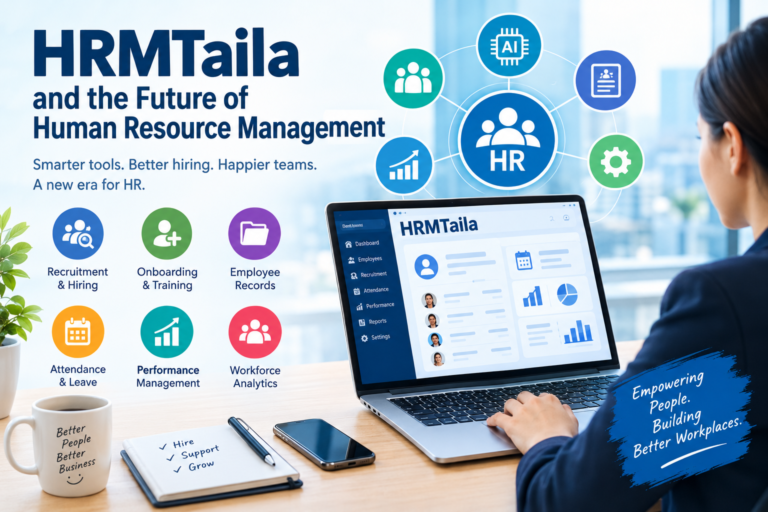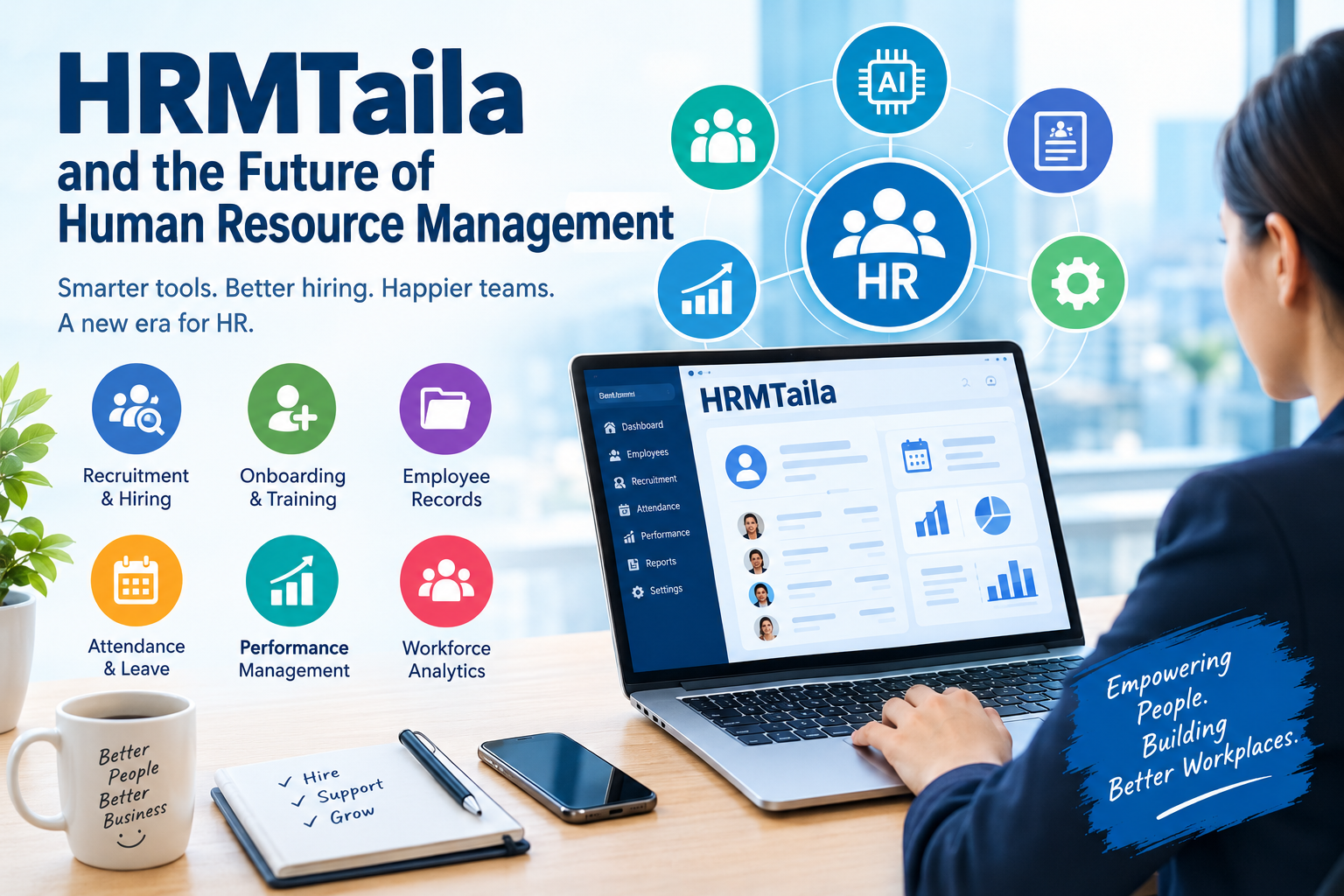
An illustration of how AI and digital tools can support recruitment, employee records, and modern human resource management.
Introduction
Technology is changing the way businesses manage their employees. From hiring new workers to organizing employee records, digital tools are helping companies handle many tasks more efficiently. Artificial intelligence is also becoming an important part of modern human resource management.
HRMTaila is a term that has recently appeared in online searches and articles related to human resource management and artificial intelligence. People searching for this keyword may want to know its meaning, possible uses, benefits, and connection with modern workplace technology.
However, the exact meaning of HRMTaila has not been officially established. Available online information does not clearly confirm it as a specific software product, registered company, or established HR platform. The topic is therefore best explored by looking at its reported connection with HR technology and the wider development of digital employee management.
What Is HRMTaila?
HRMTaila is an emerging online term associated with human resource management and AI supported workplace processes. Some online articles use the term when discussing technology that can help businesses organize employee information, support recruitment, automate routine tasks, and improve workforce planning.
The first three letters, HRM, commonly stand for Human Resource Management. This field covers the processes businesses use to recruit, manage, support, and develop their employees.
The complete meaning of HRMTaila, however, remains unclear. There is not enough reliable public information to confirm an official definition or identify a specific commercial service behind the name.
For readers, the most useful approach is to understand HRMTaila in the context of modern HR technology without assuming that every feature mentioned online belongs to a verified product.
How Does HRMTaila Relate to Human Resource Management?
Human resource management is essential for organizations of all sizes. Companies need reliable ways to handle job applications, maintain employee records, arrange training, track attendance, and communicate workplace policies.
Traditional HR departments often manage these responsibilities through spreadsheets, paper documents, email, and separate software applications. Although these methods can work, they may become difficult to manage as a company grows.
Modern HR systems bring many of these activities together in a digital environment. Automation can reduce repetitive work, while artificial intelligence can help organize information and identify useful patterns.
HRMTaila is discussed online in connection with these developments. Nevertheless, these are examples of established HR technology rather than verified capabilities of a particular HRMTaila platform.
Key Areas Associated With HRMTaila
1. Recruitment and Hiring
Recruitment requires time and careful organization. HR teams may receive hundreds of applications for a single position, making it difficult to review every document quickly.
Existing recruitment software can organize applications, track candidates, and help recruiters identify qualifications relevant to a job. Some systems also use AI to summarize resumes or assist with administrative screening.
These tools can support recruiters, but final hiring decisions require appropriate human judgment. Employers must also consider fairness, privacy, and the possibility of errors in automated assessments.
2. Employee Onboarding
Onboarding introduces new employees to their responsibilities, workplace policies, colleagues, and company procedures.
Digital onboarding tools can help businesses distribute documents, assign training materials, collect required information, and send reminders about unfinished tasks.
A well organized onboarding process helps new workers understand what is expected of them. It can also reduce the amount of repetitive administrative work performed by HR staff.
Although onboarding is commonly associated with modern HR software, its availability within HRMTaila has not been independently confirmed.
3. Employee Records Management
Businesses need accurate employee records for everyday operations. These records may include contact details, job titles, employment agreements, training history, and other work related information.
An HR information system can store approved records in one place and allow authorized employees to access relevant information.
Digital records can make searching and updating information easier than maintaining large collections of paper documents. However, companies must protect sensitive employee information through appropriate access controls and security practices.
4. Attendance and Leave Management
Attendance management helps organizations understand working hours, absences, and leave balances.
Many HR platforms allow employees to request time off online while managers review and approve those requests. Automated notifications can help prevent missed deadlines and reduce communication problems.
Some systems also connect attendance records with payroll processes. These features depend on the specific software selected by an organization and should not automatically be attributed to HRMTaila.
5. Performance Management
Performance management helps businesses review employee progress, identify training needs, and establish professional goals.
Digital systems can organize performance reviews, record feedback, and help managers monitor progress over time. AI tools may also summarize feedback or identify trends in workforce information.
However, employee performance cannot always be measured accurately through numbers alone. Managers should consider work quality, individual circumstances, teamwork, and other relevant factors before making important decisions.
6. Workforce Analytics
Workforce analytics involves examining employee related information to support business planning.
For example, a company may study employee turnover, recruitment times, training participation, or staffing levels. These insights can help managers identify operational problems and plan future hiring needs.
AI can assist with analyzing large amounts of information, but the results depend on the quality of the available data. Incorrect or incomplete information can lead to misleading conclusions.
Potential Benefits of Digital HR Technology
The technology associated with HRMTaila reflects several benefits that modern HR systems can offer when properly implemented.
Improved efficiency: Automation can reduce repetitive administrative work and allow HR teams to focus on more important responsibilities.
Better organization: Centralized records make it easier to locate employee information and maintain consistent processes.
Faster communication: Digital notifications and employee portals can help workers receive updates and submit requests.
More informed planning: Workforce reports can help managers understand staffing needs and identify areas that require attention.
Improved employee access: Self service systems allow employees to review certain records, update approved details, and manage routine requests.
Reduced manual errors: Automated workflows can reduce some mistakes caused by repeated data entry, although software errors and incorrect information remain possible.
These benefits depend on choosing a suitable system, training employees, and maintaining accurate records. They are not proof that a specific product called HRMTaila provides these services.
Is HRMTaila a Real Software Platform?
This is an important question for anyone researching the keyword.
Current publicly available information does not clearly establish HRMTaila as a verified commercial software platform. An official developer, confirmed company identity, product documentation, pricing information, and independently verified customer base have not been established by the sources reviewed.
This does not prove that no project or service with a similar name exists. It means there is insufficient reliable evidence to describe HRMTaila as an established product.
Before using a platform advertised under this name, check the following details:
- The identity and contact information of the company behind it.
- An official website and clear product documentation.
- A privacy policy explaining how employee information is collected and stored.
- Security features and access controls.
- Transparent pricing and service terms, if it is a paid product.
- Independent reviews or a working product demonstration.
Avoid submitting employee records, passwords, payment information, or other sensitive data until the service has been properly verified.
HRMTaila and Artificial Intelligence
Artificial intelligence is increasingly used to support administrative work in human resources. Depending on the software, AI can help summarize documents, answer common employee questions, organize applications, and analyze workforce trends.
For example, an AI assistant may help an HR team draft a response to a frequently asked question about annual leave. Another tool may summarize training feedback so managers can identify common concerns.
These applications can save time, but they also introduce risks. AI systems may produce inaccurate answers, reflect bias in their training data, or process personal information in ways that require careful oversight.
Human review is especially important when decisions affect recruitment, promotion, pay, or employment status.
Although HRMTaila is associated with AI in some online descriptions, its specific AI capabilities remain unverified.
Challenges and Limitations to Consider
Digital HR technology can improve workplace processes, but it is not a complete solution to every HR problem.
Data Privacy
Employee information can be sensitive. Businesses should understand where data is stored, who can access it, and how it is protected.
Implementation Costs
Some systems require subscription fees, training, technical support, and integration with existing business software. Companies should assess the total cost before choosing a service.
Learning and Training
Employees may need guidance before they can use a new platform confidently. Clear instructions and reliable support can make adoption easier.
Technical Problems
Software outages, incorrect settings, and integration failures can interrupt everyday work. Businesses should have backup procedures and a plan for resolving technical issues.
Human Judgment
Technology can assist HR professionals, but it cannot replace every aspect of communication, empathy, conflict resolution, or responsible decision making.
Understanding these limitations helps organizations choose technology that supports employees rather than creating additional difficulties.
How to Evaluate an HR Management Tool
If you are researching HRMTaila because you need an HR solution, start by identifying your organization’s actual requirements.
A small business may need basic employee records, leave requests, and attendance tracking. A larger organization may require recruitment management, payroll integration, reporting, and advanced access controls.
Compare available products based on their documented features rather than marketing claims. Request a demonstration and ask how the provider handles security, data exports, technical support, and future updates.
It is also important to check whether the software complies with employment and privacy requirements that apply in your location.
Do not choose a platform solely because its name is trending in search results. A reliable provider should be able to explain what its product does and demonstrate that it works.
The Future of HR Technology
Human resource technology is likely to continue developing as organizations seek better ways to manage information and support their employees.
AI assistants, automated workflows, employee self service portals, and workforce analytics may become more common across different types of businesses. These tools can help reduce administrative pressure and provide useful information for planning.
At the same time, privacy, fairness, transparency, and human oversight will remain important. Businesses must ensure that technological improvements do not compromise employee trust.
The future of HRMTaila itself is uncertain because its origin and identity have not been clearly established. Its online visibility may grow, but its meaning and status should be judged by reliable evidence rather than assumptions.
Conclusion
HRMTaila is an emerging online keyword associated with human resource management, artificial intelligence, and workplace automation. It provides an opportunity to explore how modern businesses use technology to organize employee information, support recruitment, improve communication, and manage routine HR activities.
However, the complete meaning of HRMTaila and its status as a specific commercial product remain unconfirmed. Readers should distinguish between general HR technology capabilities and claims made about a platform that has not been independently verified.
If you are considering an HR management solution, focus on documented features, data security, ease of use, transparent costs, and reliable customer support. Careful research will help you make a better decision and avoid relying on unsupported claims.
Frequently Asked Questions
1. What is HRMTaila?
HRMTaila is an online term associated with human resource management and AI supported workplace technology. Its official meaning and identity as a specific commercial product have not been confirmed.
2. What does HRMTaila stand for?
The letters HRM commonly stand for Human Resource Management. However, the full meaning and origin of HRMTaila have not been authoritatively established.
3. Is HRMTaila an HR software platform?
There is insufficient reliable public evidence to confirm HRMTaila as an established commercial HR software platform. Its developer and specific product features remain unverified.
4. What features are associated with HRMTaila?
Online discussions associate the term with recruitment, onboarding, employee records, attendance management, performance tracking, and workforce analytics. These are general HR technology functions, not verified features of a particular HRMTaila product.
5. Is HRMTaila safe to use?
Its safety cannot be determined without identifying and evaluating a specific service. Verify the provider, privacy policy, security measures, and terms before sharing personal or business information.
6. Can HRMTaila help small businesses?
Digital HR systems can help small businesses organize employee records, manage leave requests, and reduce repetitive work. However, there is not enough verified information to confirm that HRMTaila itself offers these services.
7. Why are people searching for HRMTaila?
People may encounter the term in online articles or search results and want to understand its meaning, possible uses, and connection with AI. Its growing online visibility does not necessarily establish it as an official product.
8. What should businesses consider before choosing HR software?
Businesses should compare documented features, pricing, security, privacy protections, ease of use, customer support, and compatibility with existing systems. They should also confirm that the provider is legitimate before sharing employee data.
About the Author