9.7.4 Leash: Meaning, Rules, and Dog Obedience Guide
Introduction
Dog obedience training helps dogs learn good behavior, follow commands, and stay calm around other people. In formal obedience competitions, handlers must understand the rules for every exercise, including how to position themselves and control their dogs. One rule that may appear in obedience rulebooks is 9.7.4 leash.
This rule is associated with the sit for examination exercise. It describes how the judge approaches the dog and how the handler returns to the heel position after the examination. Understanding the rule can help dog owners, trainers, and competition participants prepare more effectively.
In this guide, we explain what 9.7.4 leash means, how the exercise works, why correct handling matters, and how to prepare a dog for an obedience trial.
What Is 9.7.4 Leash?
The term 9.7.4 leash refers to a numbered subsection in certain dog obedience rulebooks. It is connected with the sit for examination exercise, in which a dog must remain seated while a judge approaches and briefly examines it.
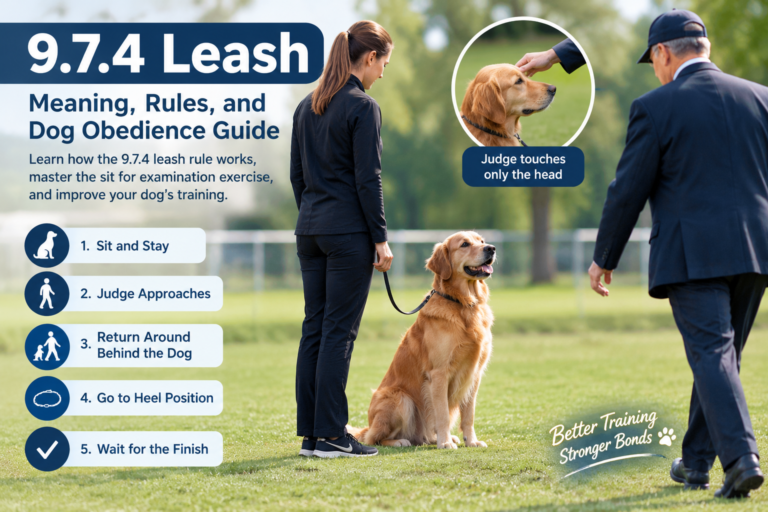
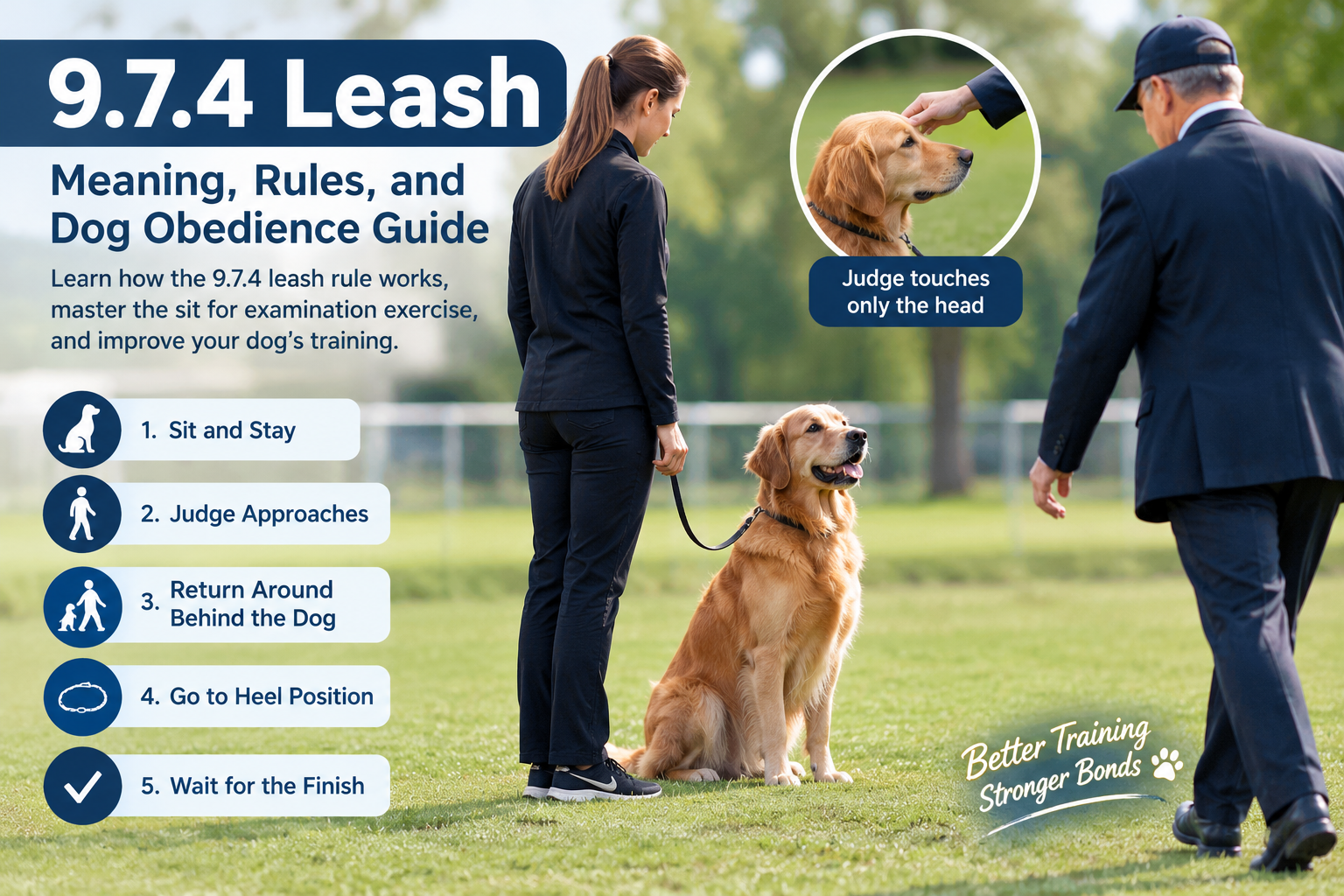
Under the Canine Coaching Club’s published obedience and rally rules, section 9.7.4 states that the judge approaches the dog from the front and touches only its head. When instructed by the judge, the handler returns by walking around behind the dog to the heel position.
The following rule requires the dog to remain seated until the judge announces that the exercise is finished. These instructions help establish a consistent procedure for competitors. Read the published rulebook.
It is important to remember that rule numbers and requirements can differ between organizations. Handlers should consult the current rulebook used by their particular competition.
What Is the Sit for Examination Exercise?
The sit for examination exercise tests whether a dog can remain calm and maintain its position while a judge approaches.
During this exercise, the handler asks the dog to sit and stay. The judge then approaches according to the competition’s instructions and performs the permitted examination.
The dog should remain in position without showing fear, aggression, or resistance. The handler must also follow the judge’s instructions and avoid giving extra commands when the rules prohibit them.
This exercise evaluates several important skills:
- Impulse control: The dog stays seated rather than moving toward the judge.
- Training consistency: The dog responds reliably to the sit and stay commands.
- Confidence: The dog remains comfortable when approached.
- Handler discipline: The handler follows the correct procedure.
- Safe behavior: The dog tolerates the examination without aggressive reactions.
These skills are useful in formal competitions and can also support everyday handling, although competition exercises follow specific rules.
How Does the 9.7.4 Leash Rule Work?
The procedure depends on the applicable rulebook, but the published subsection describes the judge’s approach and the handler’s return to heel position.
Step 1: Prepare the Dog
The handler positions the dog as directed by the judge. The dog should be comfortable wearing its permitted collar and leash.
Before entering a competition, practice the sit and stay commands in a quiet environment. Gradually introduce distractions so the dog learns to remain settled.
Step 2: Ask the Dog to Sit and Stay
The handler gives the required command or signal. The dog must remain seated while the exercise takes place.
Clear training and consistent rewards can help the dog understand what is expected.
Step 3: Allow the Judge to Approach
The judge approaches from the front and touches the dog’s head only, according to the cited rule.
Handlers should avoid interfering with the examination unless instructed to do so. Dogs should be trained gradually to accept appropriate handling without fear.
Step 4: Return to Heel Position
When the judge gives the instruction, the handler walks around behind the dog and returns to the heel position.
The handler should follow the prescribed route instead of taking shortcuts or moving unpredictably around the dog.
Step 5: Wait for the Exercise to Finish
The dog must maintain the required position until the judge gives the appropriate finishing instruction.
Handlers should learn the precise commands and sequence in the current rulebook before competing.
Why Is Correct Leash Handling Important?
Correct leash handling supports communication, safety, and consistent performance.
Safety for the Dog and Judge
A calm, well-trained dog is easier to manage when another person approaches. Appropriate equipment and gradual training can reduce the risk of sudden movements or uncomfortable interactions.
Better Communication
Dogs learn through repeated practice, clear signals, and rewards. Consistent handling helps them understand when to sit, stay, and return to the handler.
Improved Competition Performance
Understanding the rules before entering the ring reduces avoidable mistakes. Handlers can focus on the dog’s behavior instead of trying to remember the procedure during the exercise.
Greater Confidence
Dogs that receive positive, gradual training may become more comfortable around unfamiliar people. Training should never involve forcing a frightened dog to tolerate handling.
How to Train Your Dog for a Sit Examination
Preparing for this exercise takes patience and regular practice. A useful training routine can begin at home before progressing to more distracting environments.
Practice the sit command. Reward your dog for sitting promptly and remaining in position.
Build a reliable stay. Start with short periods and gradually increase the duration. Reward calm behavior.
Introduce unfamiliar people carefully. Let your dog observe people at a comfortable distance before practicing brief, appropriate handling.
Practice the handler’s movement. Teach the dog to stay while you move around it, using rewards to reinforce the behavior.
Use positive reinforcement. Treats, praise, and play can reward the behaviors you want to encourage.
Keep sessions short. Several brief sessions can be more effective than one long session that leaves the dog tired or frustrated.
If your dog shows signs of fear, growling, or defensive behavior, increase the distance and consider help from a qualified positive reinforcement trainer.
Common Mistakes to Avoid
Handlers preparing for obedience trials should pay attention to both the dog’s behavior and the written rules.
Giving Extra Commands
Some exercises restrict additional commands after the initial stay signal. Review the applicable rules to understand exactly what is permitted.
Moving Around the Dog Incorrectly
The cited rule specifies that the handler returns by walking around behind the dog. Practice this movement so it becomes familiar.
Allowing the Dog to Break Position
Standing up, moving away, or reacting strongly to the judge can affect the exercise’s result. Build the stay gradually before attempting the full sequence.
Using Uncomfortable Equipment
A leash or collar should fit appropriately and should not cause pain. Avoid using force to keep a dog in position.
Assuming Every Organization Uses the Same Rules
A rule number from one organization may have different wording or may not exist in another organization’s rulebook. Always verify the rules for your specific event.
Choosing a Suitable Leash for Training
A suitable leash should be comfortable to hold, durable, and appropriate for the dog’s size and behavior.
A standard fixed length leash is often useful for basic obedience practice because it provides predictable control. The exact leash type and length permitted in competition depend on the organization’s current regulations.
Consider these factors when choosing a leash:
- Material: Choose a durable material that is comfortable to handle.
- Length: Select a length suitable for training and permitted by the competition rules.
- Clip quality: Check that the attachment closes securely.
- Dog size: Make sure the equipment is appropriate for your dog’s weight and strength.
- Comfort: Avoid equipment that causes rubbing, pressure, or injury.
Do not assume that a particular leash or collar is permitted just because it is commonly used for training. Confirm the competition requirements before the event.
Frequently Asked Questions
What does 9.7.4 leash mean?
It refers to a subsection in certain obedience rulebooks covering the judge’s approach during the sit for examination exercise and the handler’s return to heel position.
What does the judge do under rule 9.7.4?
Under the cited Canine Coaching Club rulebook, the judge approaches the dog from the front and touches its head only. The handler returns around behind the dog when instructed.
Must the dog remain seated?
Under the following subsection in the cited rulebook, the dog must remain seated until the judge says the exercise is finished.
Does 9.7.4 apply to every dog competition?
No. The rule number and wording depend on the organization and its rulebook. Check the rules governing your particular event.
How can I prepare my dog for the examination?
Practice sitting, staying, calm behavior around people, and the handler’s movement around the dog. Use gradual exposure and reward based training.
Can a beginner train for this exercise?
Yes. Beginners can teach basic sit and stay behaviors at home. More formal preparation may require a qualified trainer familiar with the relevant competition rules.
Conclusion
The 9.7.4 leash rule is associated with the sit for examination exercise in certain dog obedience rulebooks. It explains how the judge approaches the dog and how the handler returns to heel position after the examination.
Understanding the rule, practicing reliable stay behavior, and using comfortable equipment can help handlers prepare for obedience competitions. Because requirements vary between organizations, always consult the current rulebook before entering an event.
With consistent practice, patience, and positive reinforcement, handlers can help their dogs develop the confidence and control needed for structured obedience exercises.
About the Author