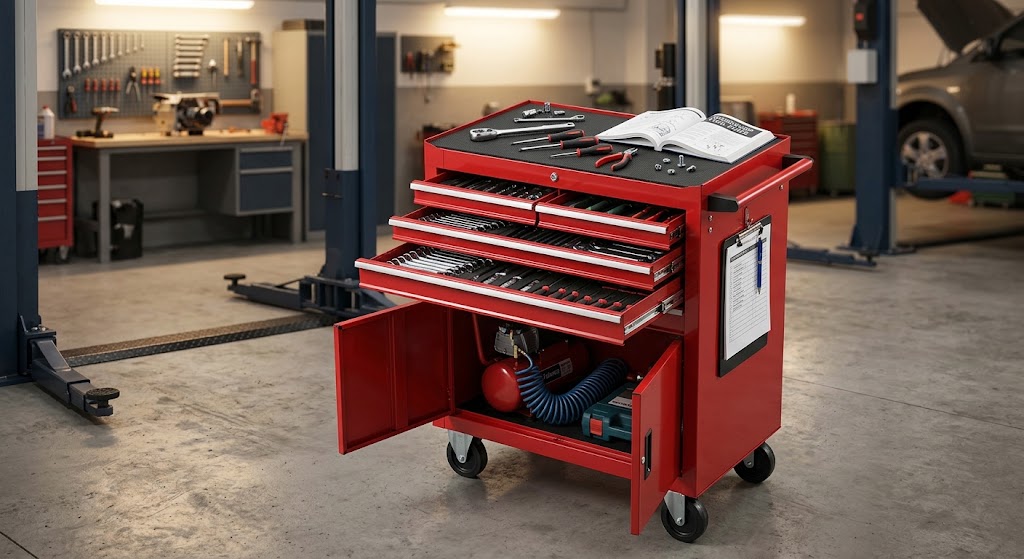
Tool Cart: A Complete Guide to Choosing the Right Workshop Storage Solution
A well-organized workspace can make almost any repair or maintenance job easier. Whether you work in an automotive garage, home workshop, construction environment, or professional service center, keeping tools within easy reach can save time and reduce unnecessary movement. One practical solution is a tool cart.
A tool cart provides a mobile way to organize hand tools, accessories, hardware, and equipment. Instead of searching through scattered toolboxes or shelves, users can keep frequently needed items together and move them directly to the work area.
What Is a Tool Cart?
A tool cart is a wheeled storage unit designed to hold and transport tools and workshop supplies. Most models feature multiple shelves, drawers, trays, or compartments.
Unlike a traditional stationary toolbox, a tool cart can be pushed around the workspace. This makes it particularly useful for mechanics, technicians, maintenance workers, and DIY users who frequently move between different work areas.
Tool carts are available in many sizes and configurations. Some are compact enough for a home garage, while larger professional models can hold a substantial collection of tools and equipment.
Why Use a Tool Cart?
One of the biggest advantages of a tool cart is organization. When tools have designated storage areas, they are easier to find and return after use.
Mobility is another important benefit. Instead of carrying multiple tools back and forth, a user can load the cart and move the entire collection to the vehicle, machine, workbench, or project area.
A tool cart can also help make better use of limited workspace. When a cart is not needed, it can often be moved against a wall or stored underneath a workbench.
Common Types of Tool Carts
Rolling Tool Cart
A rolling tool cart usually has four wheels and several storage levels. It is a versatile choice for garages and workshops where tools need to be moved regularly.
Many rolling carts include locking casters, allowing the cart to remain stable while work is being performed.
Service Tool Cart
Service carts are often designed for technicians who need quick access to tools and parts. Open shelves make it easy to see and reach commonly used equipment.
They can be useful in automotive shops, maintenance facilities, and industrial environments.
Drawer Tool Cart
A drawer-style cart combines mobility with enclosed storage. Drawers can help protect smaller tools from dust and keep equipment separated into categories.
This design is especially useful for users with large collections of sockets, screwdrivers, wrenches, and precision tools.
Heavy-Duty Tool Cart
Heavy-duty carts are constructed to support heavier loads. They may feature reinforced frames, stronger wheels, and thicker shelves.
These models are generally intended for demanding workshop or industrial applications.
Compact Tool Cart
A compact cart can be a practical option for smaller garages or home workshops. Its smaller footprint makes it easier to maneuver through tight spaces while still providing useful storage.
Important Features to Consider
Choosing a tool cart involves more than simply looking at its appearance. Several specifications can affect how useful the cart will be.
Weight Capacity
Check the manufacturer’s stated load capacity before purchasing. A cart should be capable of supporting the tools and equipment you intend to store.
Avoid exceeding the recommended capacity because excessive weight can affect stability and wheel performance.
Wheel Quality
Wheels determine how easily the cart moves. Larger casters may roll more easily over uneven workshop surfaces, while locking casters can help keep the cart stationary during use.
Storage Configuration
Consider what types of tools you own. Open shelves are convenient for larger equipment, while drawers and compartments are useful for smaller items.
A combination of shelves and drawers can provide flexibility.
Construction Material
Steel tool carts are common because of their strength and durability. Other carts may use aluminum, plastic, or composite materials to reduce weight.
The best material depends on the environment and the amount of equipment the cart needs to carry.
Handle Design
A comfortable handle makes the cart easier to move. Look for a sturdy handle positioned at a convenient height.
Locking System
If you plan to store expensive tools, a locking drawer or cabinet can provide an additional layer of security.
How to Organize a Tool Cart
A tool cart becomes more useful when its contents are arranged logically.
Keep frequently used tools in the easiest-to-reach drawers or shelves. Larger equipment can be stored on lower levels to help maintain stability.
You can also organize tools by category. For example, one drawer might contain screwdrivers, another sockets, and another measuring equipment.
Small organizers or removable trays can prevent nuts, bolts, bits, and other hardware from becoming mixed together.
Tool Cart vs. Traditional Toolbox
Both tool carts and traditional toolboxes have advantages.
A toolbox is usually more compact and easier to transport outside the workshop. A tool cart, however, provides more storage space and can be moved around a garage or work area without being lifted.
For a person who works primarily in one workshop, a rolling cart can provide convenient access to a larger tool collection. For mobile repair work, a portable toolbox may be more practical.
Some professionals use both: a large tool cart for workshop storage and a smaller toolbox for jobs away from the main workbench.
Safety Tips for Using a Tool Cart
Proper use can improve both safety and durability.
Do not overload the cart beyond its rated capacity. Keep heavier items on lower shelves or in lower drawers to help maintain a stable center of gravity.
When the cart is parked, engage the wheel locks if available. Avoid pushing the cart too quickly, particularly when it is heavily loaded.
Before moving the cart, make sure drawers are closed and loose objects are secure. Regularly inspect wheels, handles, fasteners, and shelves for damage.
Keeping Your Tool Cart in Good Condition
Routine maintenance can extend the life of a tool cart.
Clean dust, grease, and debris from shelves and drawers regularly. Check the wheels for accumulated dirt that could affect movement.
Inspect the frame and fasteners periodically. If a drawer becomes difficult to operate, investigate the cause rather than forcing it.
For metal carts, keeping the surface clean and dry can also help reduce corrosion, especially in humid workshop environments.
Is a Tool Cart Worth It?
For people who regularly work with hand tools, a tool cart can be a practical investment. It combines storage and mobility, making it easier to keep equipment organized while working.
The right model depends on the user’s tool collection, available workspace, desired mobility, and budget. A small DIY workshop may only need a compact cart, while a professional garage may benefit from a larger heavy-duty model.
Conclusion
A tool cart is more than a place to store tools. It can become the central organization point of a workshop, allowing users to keep equipment accessible and move it wherever work is taking place.
When choosing one, pay attention to weight capacity, wheel quality, construction, storage layout, security features, and overall dimensions. With thoughtful organization and regular maintenance, a good tool cart can make a workshop cleaner, more efficient, and easier to work in.
About the Author