Mamdani’s Six Mile Walk Became a Viral Moment. His Record Now Gives It Context
Why Mamdani’s Six Mile Walk Got So Much Attention
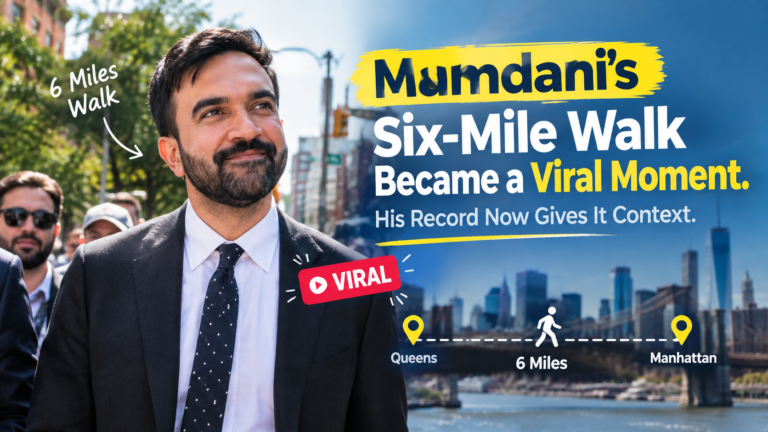
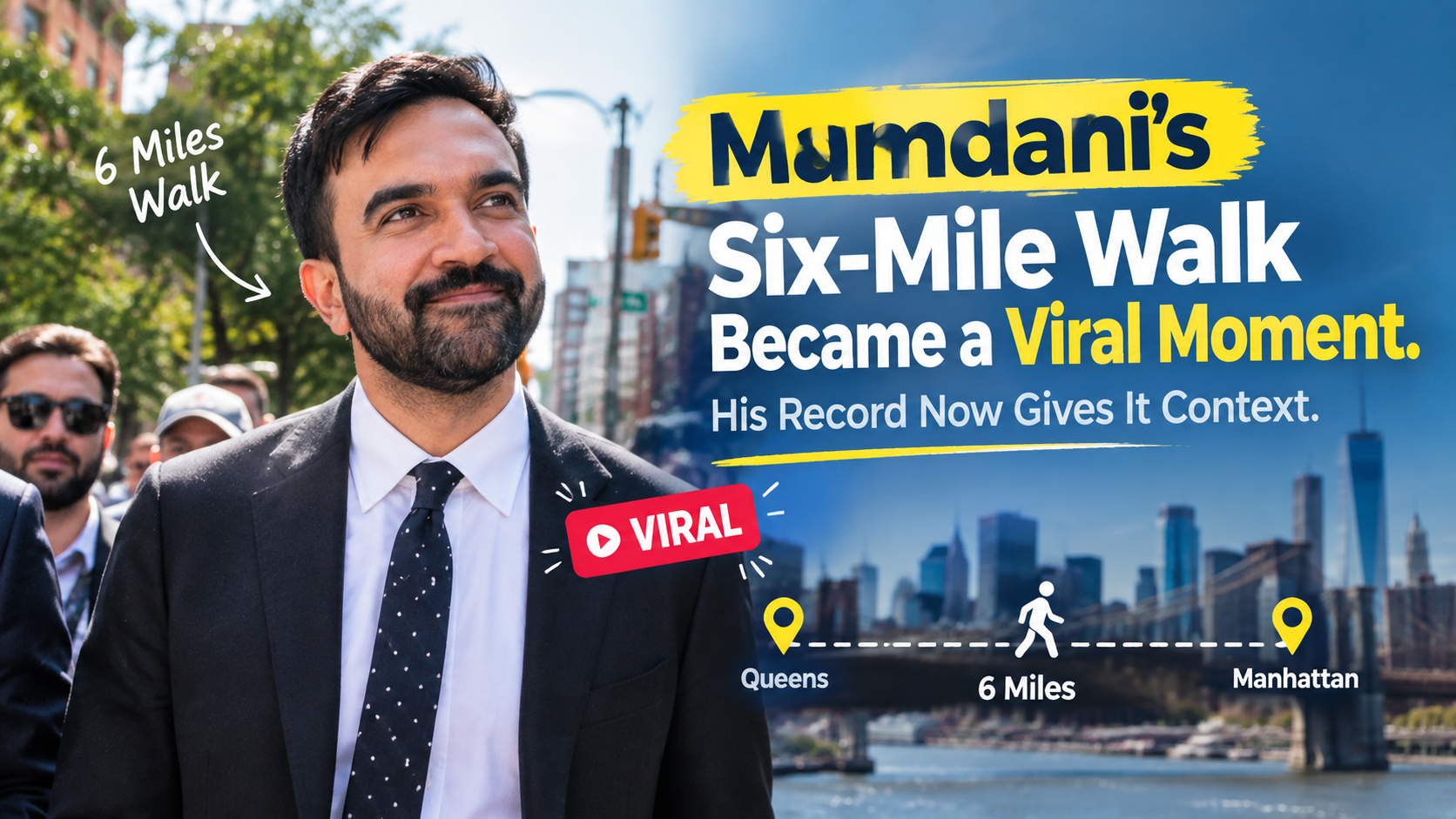
On April 8, 2026, New York City Mayor Zohran Mamdani walked about six miles from City Hall to Gracie Mansion after completing his first 100 days in office. Videos of the walk spread widely online as people stopped to speak with him, take photos, and record short clips.
The walk became a simple image of Mamdani moving through New York City on foot rather than ending the day with a formal event. That image quickly became part of the public discussion around his first months as mayor.
But a walk alone does not explain a mayor’s record. The policies, programs, agreements, and disputes that followed give more information about how Mamdani has used his office.
As of September 2026, several major actions provide useful context for that viral moment.
What Happened During the Six Mile Walk?
Mamdani’s walk began at City Hall in Lower Manhattan and ended at Gracie Mansion on the Upper East Side. During the trip, residents approached him for conversations and photos.
Reports from the time described the event as an informal public interaction. The walk also connected with a promise Mamdani had made about being visible in the city and spending time around ordinary New Yorkers.
That made the footage easy to share. A short video of a mayor walking through city streets, talking with residents, and stopping for pictures is much easier to understand than a long policy speech.
The online response was mixed, as is common with political figures. Some viewers saw the walk as evidence of accessibility, while critics questioned how much political value should be placed on a public appearance. Those are opinions about the event rather than facts that can be independently measured.
The Walk Came After His First 100 Days
The timing of the six mile walk is important.
Mamdani had just completed his first 100 days as mayor. During that period, his administration focused heavily on childcare, housing costs, worker protections, transportation, and city services.
The administration’s childcare plans became one of its major early priorities. New York City and New York State announced a $1.2 billion investment connected to free childcare for two year olds and improvements to existing programs.
The first stage of the program was planned to provide 2,000 two year old seats. City officials said the program was expected to expand to 12,000 seats the following year as funding and capacity increased.
That policy work gives a different view of the administration from the viral walking video. The walk showed Mamdani interacting with people in public. The childcare program showed how his administration was using city and state funding to pursue one of its stated priorities.
A Major Worker Settlement Changed the Conversation
The most recent development adding context to Mamdani’s record is a $131.5 million settlement involving DoorDash and New York City.
The agreement was announced on September 22, 2026, after a city investigation into delivery worker pay. More than $115 million is set to go directly to affected workers, while more than $16 million covers civil penalties and costs. The city said more than 260,000 workers were affected.
Reuters reported that the settlement followed a city probe that found DoorDash had underpaid or delayed payments to workers. DoorDash acknowledged errors and agreed to additional monitoring under the settlement.
This matters because worker protection has been a clear part of Mamdani’s political message. The DoorDash agreement gives that message a concrete policy example involving a large number of workers.
It also shows the difference between a campaign message and government action. A campaign can make promises, while an administration has to use laws, agencies, investigations, and negotiations to produce an actual result.
What the Childcare Record Shows
Childcare has also been central to Mamdani’s early agenda.
The city says its Birth to 2 program continued into the 2026 to 2027 school year, supporting more than 120 infant and toddler seats across 10 community based programs. The city has also started its first 2 K program, with full day and full year care planned for 2,000 two year olds in the initial stage.
The broader childcare plan was supported by a $1.2 billion state investment. Mamdani has said the plan is intended to expand over several years, with the goal of providing a seat for every two year old by the end of his four year term.
The important point is that the program is still developing. A funding announcement and an initial group of seats do not mean the full long term goal has already been achieved.
That distinction is useful when looking at political records. Some actions can be measured today, while other promises will require more time before their results can be assessed.
Why the Walk Became a Symbol
The six mile walk was easy to understand.
There were no long policy documents to read. There was a mayor walking through New York, meeting people, and appearing in videos recorded by residents.
That helped turn the walk into a strong visual moment. It also fit with Mamdani’s public image of being accessible and present in the city.
However, a public image is different from a governing record. A mayor can create a memorable moment without that moment telling the full story of the administration.
The same is true in the other direction. A policy announcement may have a major effect without becoming a viral video.
Looking at both is more useful than focusing on either one alone.
Mamdani’s Record Includes More Than One Issue
Mamdani’s first months in office have involved several areas of city policy.
Childcare has received major attention through city and state funding. Delivery workers have received attention through enforcement of city pay laws. Housing, the city budget, transportation, and public services have also remained major issues for the administration.
The administration’s fiscal plans have also been part of the debate. In May, City Hall released a $124.7 billion executive budget proposal for fiscal year 2027. The administration said the plan balanced the budget without a property tax increase while making investments in childcare and other programs.
Those claims come from the mayor’s office and represent the administration’s description of its own budget. Independent analysis and later budget results are needed to assess the full effects.
This is why the six mile walk should be viewed as one part of a much larger record.
The Difference Between Image and Policy
Political coverage often focuses on moments that are easy to share.
A photo, speech, public meeting, or unusual event can reach millions of people faster than a budget document. That does not make the moment meaningless, but it also does not make it a complete measure of government performance.
Mamdani’s six mile walk is a good example.
The image showed a mayor walking through the city and speaking with residents. His later record provides additional information about what his administration was doing at the same time.
The DoorDash settlement, for example, involves a specific amount of money, a specific group of workers, and a specific city investigation. The childcare program also has measurable figures, including funding and the number of initial seats.
Those details make it possible to examine the administration using records rather than relying only on a viral video.
What the DoorDash Settlement Means for New Yorkers
The DoorDash agreement is especially important because it involves a large group of workers.
According to New York City officials, more than 260,000 delivery workers are eligible for relief connected to underpayment. More than $115 million is expected to go directly to workers. The city says workers do not need to file a claim to receive payment because officials identified affected workers through company records.
Reuters reported that the median payment is expected to be about $48, although individual payments will vary. The settlement also includes monitoring requirements designed to help the city track compliance with delivery worker pay laws.
DoorDash said its mistakes were not intentional but acknowledged that some workers were underpaid or paid late. The company agreed to resolve the matter rather than continue the dispute.
The settlement therefore provides a concrete example of how city agencies can use enforcement powers to address a labor issue.
What Readers Should Watch Next
The next stage of Mamdani’s record will depend on whether his early programs continue to expand and how the city handles its financial and service demands.
Childcare is one area to watch because the current program is planned to grow. City officials have discussed moving from 2,000 seats in the first stage to 12,000 seats in the following year.
Worker enforcement is another area to watch following the DoorDash settlement. The agreement includes monitoring, which should give the city more information about compliance.
Housing and affordability will also remain important because they were central issues in Mamdani’s campaign and administration.
These areas will provide more measurable information about his record than a single viral event.
What the Six Mile Walk Really Tells Us
The walk tells us something about how Mamdani presents himself as mayor and how residents respond to him in public.
It does not, by itself, prove that his policies are successful or unsuccessful. Those questions require evidence from budgets, program results, enforcement records, public data, and other sources.
His record now includes several measurable developments. The city has launched the first stage of its 2 K childcare program, continued funding for early childhood care, and announced a $131.5 million DoorDash settlement affecting more than 260,000 delivery workers.
Those facts give the viral walk more context without requiring the walk itself to carry the full story.
Final Thoughts
Mamdani’s six mile walk from City Hall to Gracie Mansion became a widely shared political moment because it was simple, visual, and easy for people to record and share.
Months later, his administration has a growing record that can be examined through specific actions and numbers. The $131.5 million DoorDash settlement and the $1.2 billion childcare investment are two examples of major developments that provide more substance than a single public appearance.
The most useful way to follow Mamdani’s record is to look beyond viral clips. Watch the results of the programs, the money committed, the number of people affected, and the decisions made by city agencies.
As more data becomes available, those records will provide a clearer picture of how the administration is governing New York City.
About the Author