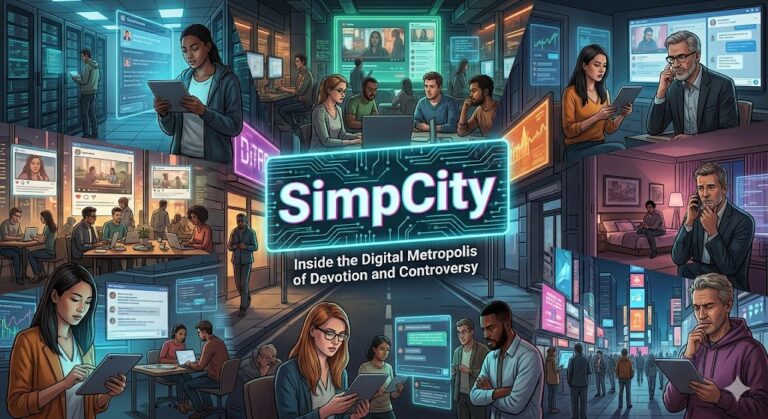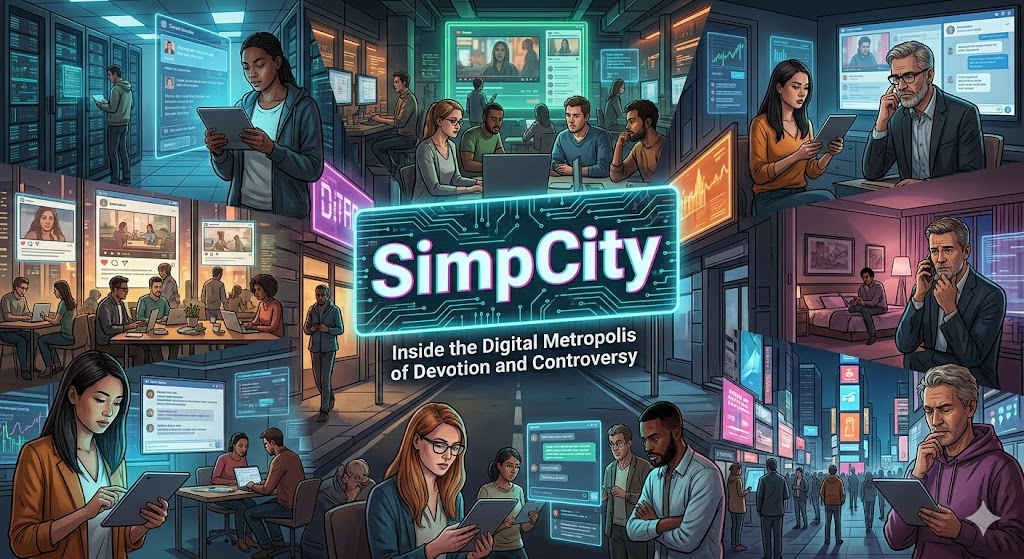
SimpCity: Inside the Digital Metropolis of Devotion and Controversy
In the lexicon of digital culture, few terms are as dualistic as “SimCity.” For one group of people, it evokes fond memories of meticulously zoning residential districts and balancing municipal budgets in the classic Maxis video game. For a much larger, newer generation, it refers to a sprawling online forum community that has become a controversial hub for adult content, celebrity worship, and a specific brand of digital devotion. This is the story of two cities: one built on code and urban theory, the other on fandom and controversy.
The Original: A Libertarian Toy Land
The story of the first SimCity begins in 1989 with designer Will Wright. Rejecting traditional gaming tropes, Wright created a digital sandbox where players could build and manage a metropolis without a clear “win” state. The game became a cultural phenomenon, but beneath its playful exterior—complete with Godzilla-like monster attacks—lay a surprisingly rigid ideological framework.
Wright’s simulation was heavily inspired by the work of Jay Forrester, an engineer whose 1971 book Urban Dynamics used complex equations to model civic life. Forrester’s models, which were colored by his libertarian leanings, suggested that regulatory policies were detrimental and that razing low-income housing could economically revitalize cities. These biases trickled down into the game’s code, turning SimCity into what WIRED recently called a “libertarian toy land” where players often succeed by gutting public services.
Despite this, the franchise flourished. From the isometric depths of SimCity 2000 to the modding-friendly complexity of SimCity 4, the series became a benchmark for city-building. It offered players a controlled environment to learn about traffic flow, pollution, and urban planning—even if that education came with a heavy dose of ideological baggage. For many, the game was a peaceful escape. As one fan noted, it was a place to create orderly, functional cities—a stark contrast to the chaotic urban planning of the real world .
The Successor: A Community Built on Devotion
As the original SimCity franchise faded—Maxis’ Emeryville studio was shuttered in 2015—a new entity rose to claim the name, but with a vastly different meaning.
The name derives from internet slang: a “simp” is someone who performs excessive sympathy and attention toward another person, often in pursuit of a romantic or sexual relationship. What was once an insult has been reclaimed by some as a tongue-in-cheek identity. Today, the SimCity forum operates as a massive digital metropolis of its own, boasting over 4.4 million registered users (“Simps”), more than 150,000 discussion threads, and nearly 3 million posts.
The platform serves as a repository for content ranging from premium fan site subscriptions (OnlyFans, Patreon, ManyVids) to social media gossip. It has become a significant hub for sharing, requesting, and discussing “leaked” or付费 content, which places it in a legal and ethical gray area .
The Allure and the Exploitation
The appeal of the SimpCity forum lies in its structure and community. It is highly organized, with sections dedicated to specific content creators, AI-generated material, and even deepfake technology. For users, it provides a sense of “freedom” from the strict content moderation of mainstream platforms. Some members describe it as a haven for self-expression, challenging traditional masculine norms by openly expressing devotion to creators .
However, this freedom comes at a cost. The platform is riddled with ethical landmines. The sharing of copyrighted or private material without consent has drawn the ire of content creators who see their income streams compromised. Reviews on sites like Trustpilot and ScamAdviser highlight a mixed reputation: while users love the “free gold,” they often complain about opaque moderation, sudden bans, and the risky nature of engaging with potentially illegal content .
The “Requests” section, known as “Home of the heroes,” fosters a collaborative yet problematic environment where users work together to find specific—often private—content. This has led to allegations of doxing, harassment, and the promotion of toxic behaviors behind the veil of anonymity .
A Tale of Two Metropolises
The divergence between the two SimpCities highlights a broader shift in digital culture. The original SimCity game was about creation—building something from nothing within a rule-based system. The new SimpCity is about consumption and connection—navigating the murky waters of digital fandom, parasocial relationships, and the economics of attention.
One is a nostalgic memory of pixelated power plants and RCI graphs. The other is a living, breathing forum that tests the limits of privacy, copyright law, and community standards. Both, however, share a common thread: the human desire to build and belong. Whether managing a virtual tax rate or hunting for a rare piece of fan content, users are engaging in the age-old process of constructing their ideal environment.
Conclusion
As we look toward the future, the legacy of “SimpCity” remains contested. Will it be remembered for its contribution to urban gaming and the inspiration it provided to a generation of designers? Or will the name become permanently synonymous with the controversies of unchecked online communities and the exploitation of digital content?
About the Author