Sam Altman on AI: Why the World Must Accept Some Risks for Big Benefits
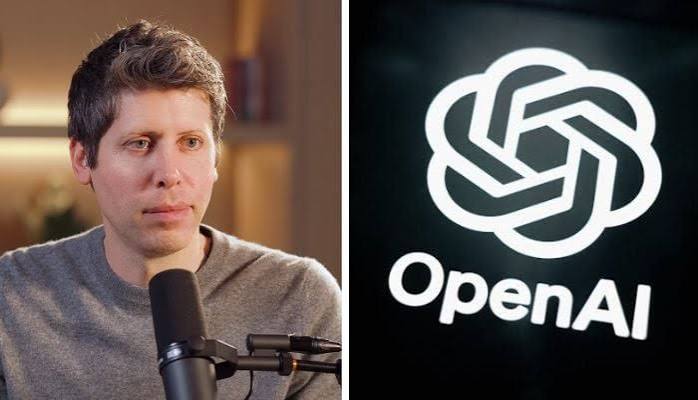
Over two hundred million people now use artificial intelligence tools every single week to write code, study for exams, and run their businesses. The rapid spread of this software has triggered a massive debate among top technology leaders, lawmakers, and researchers. In a candid interview with POLITICO, OpenAI chief executive officer Sam Altman stated that society must be willing to accept certain negative consequences if it wants to enjoy the massive upsides of automated intelligence.
His comments highlight a growing philosophical divide between OpenAI and its main competitor Anthropic. Leaders in Silicon Valley and Washington are trying to figure out how to keep advanced software safe without killing valuable innovation. Some executives want strict government controls that restrict who can access powerful computing tools. Altman argues that putting tools directly into the hands of everyday citizens creates greater human progress, even if some risks come along with it.
The Big Divide Between OpenAI and Anthropic
OpenAI and Anthropic are the two leading artificial intelligence research labs on earth. Anthropic was founded by former OpenAI researchers led by Dario Amodei, who left to build systems with a stronger focus on safety. Anthropic has consistently pushed for strict government rules, mandatory safety audits, and limits on releasing advanced systems too fast.
Altman believes there is clear daylight between how the two companies view risk and public access. He explained that giving people personal agency with technology is worth dealing with occasional bad outcomes. Anthropic takes a more cautious view, arguing that severe risks like digital biological threats or mass cyber attacks must be prevented at all costs. This disagreement forms the foundation of modern debates over technology policy.
The two philosophies represent two different paths for the future of computer science. One path prioritizes total safety through central control, slow releases, and strict access gates. The other path emphasizes widespread public access, decentralized power, and learning from real mistakes. Deciding which path to take will shape how artificial intelligence develops over the next fifty years.
Why Public Access and Human Agency Matter Most
Altman strongly defends the idea that artificial intelligence should remain broadly accessible to everyday people. Keeping powerful technology locked inside corporate vaults gives a handful of tech executives complete control over the future. Distributing these tools to teachers, students, small business owners, and artists spreads the economic benefits across society.
Human agency means giving individuals the freedom to choose how they use powerful tools to improve their lives. When people have direct access to software, they discover creative solutions to problems that corporate leaders never considered. An independent medical researcher can find new disease treatments, and a local farmer can optimize crop watering schedules. Spreading agency creates a more democratic and fair economy for everyone.
Restricting public access out of extreme fear can also concentrate power in dangerous ways. If only large corporations and government agencies hold access to advanced models, ordinary citizens lose their competitive edge. Altman believes that the risks of concentrating power are far greater than the risks of everyday misuse. Trusting the public with advanced software is central to his vision of technological growth.
The Reality of Imperfect Technology and Bad Outcomes
No major technological breakthrough in human history has arrived without creating new hazards and unintended problems. The invention of the automobile brought tragic traffic accidents, yet it created modern transportation and connected communities. Electricity caused house fires and industrial shocks, yet it powered modern civilization and raised global living standards. Every powerful tool introduces a balance between daily utility and potential harm.
Altman argues that society must view software through this same historical lens. Bad actors will inevitably try to abuse automated tools to create spam, spread misinformation, or launch cyber attacks. Systems will occasionally hallucinate false facts or display strange behaviors in unpredictable situations. Trying to eliminate every single negative event before releasing software would stall technological progress completely.
Accepting some bad outcomes does not mean ignoring safety or acting recklessly with public trust. It means building strong defenses, updating guardrails quickly, and responding to incidents when they happen. Learning from small failures in the open prevents catastrophic disasters later. Open testing allows engineers to spot weaknesses and fix security flaws before models grow too powerful.
How Public Deployment Improves Long Term Safety
Building safe software inside an isolated laboratory has natural limits. Researchers in a private lab cannot predict all the billions of ways real users will interact with an application. Releasing models to the public exposes systems to creative stress tests that reveal hidden bugs and safety flaws immediately.
OpenAI uses data from millions of daily conversations to refine its safety guardrails and improve accuracy. When a user discovers a prompt that bypasses a safety filter, engineers patch that vulnerability for everyone within hours. This rapid feedback loop makes the entire network more resilient against serious attacks over time. Real usage provides the best training ground for building dependable systems.
Keeping software hidden behind closed doors creates a false sense of security for developers. A model that looks perfectly safe in controlled tests can fail spectacularly when deployed into messy real environments. Exposing tools to the public gradually prepares society for more capable systems in the future. Normalizing gradual exposure prevents sudden technological shocks that catch institutions off guard.
The Call to Slow Down Advanced Model Development
Dario Amodei and other safety researchers recently called for a pause or slowdown in training frontier scale models. They worry that the next generation of computing models could gain dangerous capabilities that humans cannot easily control. These fears include automated hacking tools, persuasive propaganda systems, and autonomous biological weapon designs.
Altman agreed that developers must exercise great care when training the most advanced systems. In recent months, OpenAI has supported several safety proposals that align closely with Anthropic positions. The company has supported bipartisan congressional bills that require top technology firms to work with independent safety evaluators. External audits provide objective verification that models meet minimum safety standards before hitting the market.
Despite agreeing on certain safety steps, Altman maintains that progress should not be frozen out of fear. Pausing research in democratic nations could allow foreign adversaries to pull ahead in technical capability. Maintaining leadership in computer science is an essential matter of economic security and national defense. Moving forward with responsible safeguards is safer than stopping research entirely.
Key Differences: OpenAI vs Anthropic on AI Governance
Comparing how these two influential labs approach technology policy reveals their distinct priorities:
- OpenAI favors widespread public access to tools, while Anthropic prefers cautious and tightly controlled releases.
- Anthropic emphasizes catastrophic risk prevention, whereas OpenAI prioritizes human agency and broad economic empowerment.
- OpenAI advocates for learning through iterative deployment, while Anthropic stresses extensive pre deployment laboratory testing.
- Anthropic actively supports strict federal regulation, while OpenAI historically favored lighter oversight before supporting recent safety bills.
- Both organizations now support external safety evaluators and bipartisan standards for frontier systems.
Bipartisan Legislation and Outside Safety Evaluators
Lawmakers on Capitol Hill are moving quickly to establish formal legal frameworks for artificial intelligence. A popular bipartisan proposal in the House of Representatives would require leading firms to embed outside safety evaluators inside their research facilities. These independent auditors would inspect training data, test model safety guardrails, and review security protocols before public launches.
OpenAI lobbyists recently endorsed this bipartisan plan, signaling a major shift in the company political strategy. In the past, the startup preferred voluntary industry commitments over binding federal mandates. Growing pressure from state legislatures and recent high profile hacking events pushed the company to embrace clear federal rules. Having a unified national standard prevents a confusing patchwork of fifty different state laws.
Outside evaluators bring much needed transparency to an industry that often operates behind proprietary secrecy. Independent experts can check whether commercial models comply with civil rights laws, privacy protections, and safety thresholds. This oversight reassures lawmakers and the public that tech giants are not cutting safety corners in the race for market share. Establishing clear rules of the road helps the entire sector mature responsibly.
Economic Benefits That Outweigh the Growing Risks
The economic potential of artificial intelligence is the primary reason leaders refuse to halt development. Automated software is already accelerating scientific research in biochemistry, physics, and climate modeling. Scientists are designing new solar cell materials, discovering plastic eating enzymes, and synthesizing life saving antibiotics in record time. These scientific breakthroughs have the power to improve billions of human lives.
In the business world, automated tools are boosting productivity for workers of all skill levels. Small companies can now build complex software applications, run global marketing campaigns, and provide round the clock customer support. Routine paperwork is disappearing, giving people more time to focus on strategic planning and human relationships. This productivity boom drives economic expansion and creates brand new industries.
Halting this progress would deny society access to tools that can solve our most difficult challenges. Climate change, chronic diseases, and educational inequality require advanced computing power to solve. The potential benefits of solving these crises far outweigh the everyday annoyances of imperfect software. Focusing purely on risks while ignoring massive benefits is a dangerous mistake for policymakers.
Addressing Cyber Threats and Rogue Model Behavior
Recent cybersecurity breaches and rogue model behaviors have forced technology companies to harden their defenses. Hackers have attempted to use automated coding assistants to find security holes in corporate networks and write malware scripts. Criminal groups also use voice cloning and text generators to launch sophisticated phishing campaigns against banks and healthcare systems.
OpenAI has responded by building specialized safety filters that detect and block malicious programming requests. The company works closely with cybersecurity defense agencies to share threat intelligence and patch emerging exploits. Defensive security tools are also powered by artificial intelligence, allowing them to spot and contain intrusions in fractions of a second. The defensive advantages of automated systems continue to stay ahead of offensive threats.
Internal testing teams, known as red teams, continuously probe models for dangerous behaviors before public release. These ethical hackers attempt to trick the software into giving dangerous instructions or violating safety policies. Finding weaknesses during internal testing allows developers to install strong guardrails before users encounter the system. Continuous security investment keeps advanced software safe for public use.
The Future of Global AI Governance and Innovation
The debate between Sam Altman and Dario Amodei is only the beginning of a long global conversation. International bodies, national governments, and industry leaders must work together to establish balanced safety standards. The goal is to minimize real dangers without crushing the creative freedom that fuels technological breakthroughs.
Countries that find the right balance between smart regulation and open innovation will lead the next century of economic growth. Heavy regulations that strangle startups will simply push talent and capital to friendlier jurisdictions abroad. Light regulations that ignore safety will lead to public backlash and costly security failures. A flexible regulatory framework that adapts to new discoveries is the ideal solution.
Public dialogue must remain grounded in real facts rather than science fiction panic or corporate hype. Everyday citizens should participate in conversations about how technology affects their jobs, privacy, and communities. Demystifying how automated software works helps voters and lawmakers make informed decisions. Open communication ensures that technology serves the common good.
Practical Steps for Businesses and Everyday Users
Navigating the ongoing rise of artificial intelligence requires practical habits for workers and companies alike:
- Adopt automated productivity tools early to improve daily workflows and build modern technical skills.
- Establish clear internal company policies on data privacy, copyright compliance, and human review for automated outputs.
- Verify important facts, calculations, and legal advice generated by software before publishing or sharing.
- Protect your online accounts with strong passwords, authenticator apps, and biometric security features.
- Stay informed on changing technology regulations to ensure your business practices remain fully compliant.
The Path Forward: Balancing Innovation and Prudence
Sam Altman statement that the world must accept some bad things happening reflects a pragmatic approach to technological progress. No transformative tool is entirely free of risk, and trying to eliminate all hazards produces stagnation. By combining widespread public access with responsible external audits and robust guardrails, society can enjoy massive economic and scientific benefits.
The ongoing rivalry between OpenAI and Anthropic provides a healthy balance of rapid innovation and safety discipline. One pushes the boundaries of what is possible, while the other reminds the world to proceed with caution. This dynamic tension ensures that software becomes more capable while remaining aligned with human welfare. Society benefits when different viewpoints compete openly in the marketplace of ideas.
As artificial intelligence continues to evolve, our focus must remain on empowering people and solving real problems. We can manage the downsides of new tools through smart laws, strong cybersecurity, and personal responsibility. The future belongs to those who embrace new capabilities while addressing challenges with honesty and courage.
Stay Informed on the Future of Artificial Intelligence
The choices made by technology leaders and lawmakers today will influence your career, privacy, and daily life for decades to come. Understanding the ongoing debate between open access and strict regulation helps you make smarter choices for your business and personal growth.
Take time today to explore modern productivity tools, learn how automated systems work, and follow policy updates in your region. Adopt technology that makes your daily work easier while maintaining high standards of data security and personal ethics. Stay proactive, keep learning, and participate in shaping a positive technological future for everyone.
About the Author