Physical AI vs Generative AI: What Is the Difference?
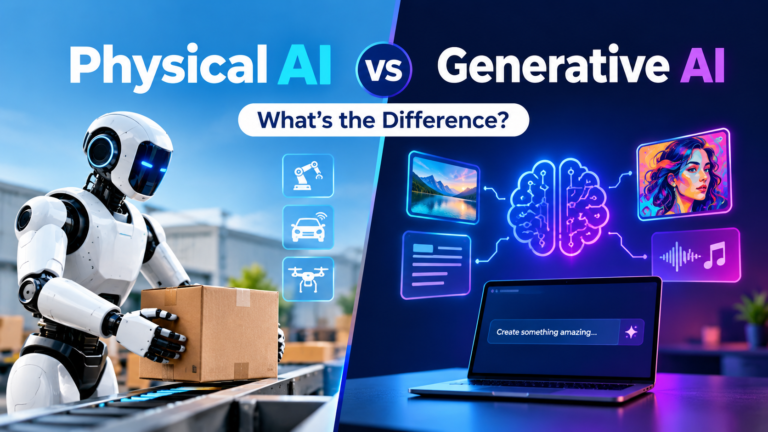
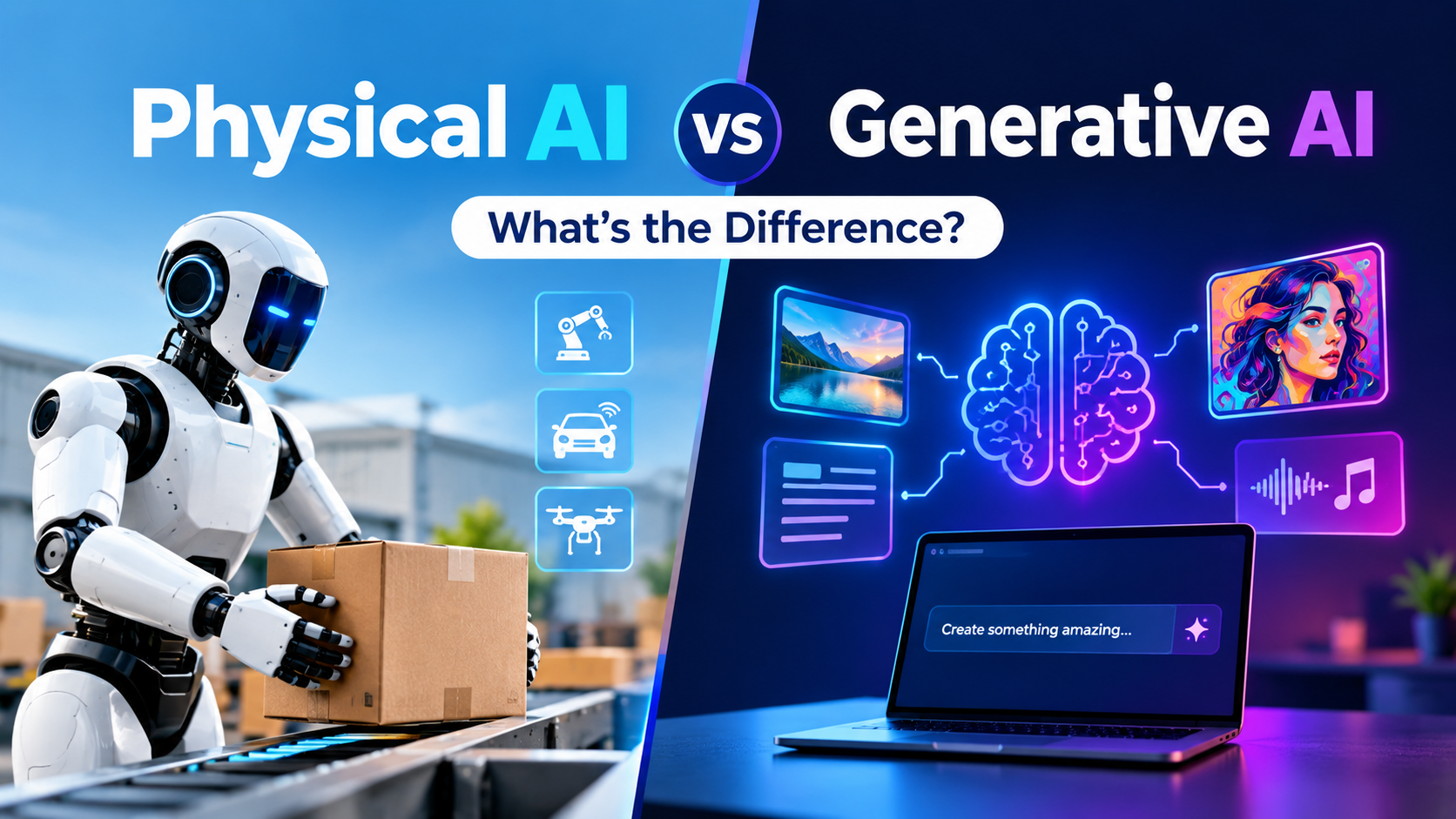
Over eighty percent of major technology businesses now use software models to produce text, pictures, and computer code. At the same time, factories and logistics warehouses are preparing to deploy over five million autonomous robots by 2030. These two technological forces represent two very different sides of modern computing. Comparing Physical AI vs Generative AI helps you see how digital software differs from machines that interact with our physical environment.
Many people hear the term artificial intelligence and think only of chat applications on computer screens. Those screen tools represent generative systems that create digital content out of words and pixels. Physical systems, by contrast, operate inside physical machines that touch, move, and navigate through the real world. Both technologies offer tremendous benefits, but they solve completely different human problems.
What Is Generative AI?
Generative artificial intelligence refers to computer models designed to produce new digital content. You provide a prompt, and the software generates written paragraphs, realistic images, recorded speech, or functional software scripts. These systems live entirely inside digital computers, cloud servers, and smartphone screens. They do not have physical bodies, wheels, or mechanical hands.
These models learn by studying billions of digital files collected from across the internet. They analyze patterns in text, audio tracks, and photography to learn how words and colors fit together. When you ask for a story or an image, the software predicts the most logical sequence of words or pixels. The entire process takes place in virtual server memory in a few seconds.
The primary benefit of generative software is rapid creative output and administrative speed. Writers use it to draft outlines, programmers use it to check code, and marketers use it to build social media graphics. It reduces the hours required to complete daily office tasks, giving people more free time for strategic planning.
What Is Physical AI?
Physical artificial intelligence refers to software systems built directly into machines that interact with the physical world. These systems power self driving cars, warehouse robot arms, flying delivery drones, and smart prosthetic limbs. Unlike screen applications, physical systems must obey the laws of gravity, friction, momentum, and balance.
A physical system relies on physical sensors like cameras, laser distance scanners, and touch sensors to perceive its surroundings. It processes sensor signals continuously to decide how motors, joints, and wheels should move. When an autonomous tractor navigates a muddy farm field, it adjusts its tire speed and steering to stay on course. This ability to act safely in physical spaces is called spatial intelligence.
The main benefit of physical systems is taking over dangerous, heavy, or repetitive physical labor. Robots can work inside extreme heat, lift heavy metal parts in car factories, and inspect unstable bridges. Deploying machines for hazardous tasks keeps human workers safe from workplace injuries.
Key Differences Between Physical AI vs Generative AI
Understanding the core differences between these two technologies helps business leaders and workers plan for the future. Generative models operate in a digital space made of data bits where mistakes cause little physical damage. Physical models operate in a world made of physical matter where every movement carries real consequences.
The table below illustrates how Physical AI vs Generative AI compare across essential operational categories.
| Feature Category | Generative AI | Physical AI |
|---|---|---|
| Primary Output | Digital text, code, audio, and images | Physical movement, navigation, and manipulation |
| Operating Environment | Cloud servers, web browsers, and screens | Real physical world, factories, and outdoor roads |
| Core Hardware | Graphic processing chips and cloud servers | Motors, sensors, cameras, and mechanical joints |
| Error Consequence | Factual typo, weird image, or broken code | Physical crash, dropped item, or mechanical damage |
| Main Focus Area | Information processing and content creation | Spatial awareness, balance, and physical labor |
How Generative Systems Learn and Create
Generative systems train on massive datasets of human created content. A large language model reads trillions of words from books, encyclopedias, research papers, and public web pages. An image generator studies millions of labeled photographs and paintings to learn artistic styles. This broad training gives the software a wide repository of facts and visual concepts.
The creation process relies on probabilistic pattern matching. When you type a question, the model does not think like a human philosopher. It calculates which word or pixel should appear next based on statistical likelihood. This mathematical prediction allows the software to generate essays, translate languages, and write poems with remarkable fluency.
Generative software operates with high tolerance for variation. If an image generator places a tree slightly to the left, the picture still looks pleasant and useful. This creative flexibility makes generative software ideal for brainstorming, entertainment, and marketing tasks where there is no single correct answer.
How Physical Systems Learn and Move
Physical systems learn through a combination of physics simulations and real world trial practice. Engineers build digital twin environments on computers that simulate gravity, surface friction, and object weight accurately. A robot model practices walking or grasping objects millions of times inside the simulation before ever touching physical hardware.
Reinforcement learning guides how physical machines master difficult movements. When the simulated robot takes a successful step without falling, the algorithm receives a positive reward signal. If the robot loses balance, the algorithm adjusts motor timing and tries again. This continuous practice teaches the machine how to handle uneven ground, slippery surfaces, and unexpected obstacles.
After simulation training, the model is installed onto physical hardware for real world testing. The software must adapt instantly when physical reality differs from the simulation. If a robot picks up an apple that is softer or heavier than expected, it adjusts its grip pressure immediately to avoid crushing the fruit.
Why Physical AI Is Much Harder to Build
Building machines that move through the physical world is vastly more difficult than building screen software. The physical world is messy, unpredictable, and constantly changing. Weather shifts, lighting fades, floor surfaces get wet, and human pedestrians move in unexpected directions. A physical system must handle all these random variables without crashing.
Time constraints are also far more severe for physical machines. If a chatbot takes three extra seconds to generate an answer, nobody gets hurt. If a self driving car takes three extra seconds to process a pedestrian stepping into the road, the result can be catastrophic. Physical systems must process sensor data and execute motor actions in milliseconds without fail.
Hardware durability presents another continuous engineering challenge. Motors wear out, camera lenses get dirty, and sensor wires can break over time. The software running inside the machine must detect component failures and compensate safely. Building durable machines that operate reliably for years requires massive engineering investments.
Safety regulations for physical machines are strictly enforced by government agencies. A medical robotic arm or self driving delivery truck must pass rigorous safety certifications before public deployment. Proving that an autonomous physical machine is completely safe takes years of testing and documentation.
Real World Applications You See Today
Generative software has already become a standard part of everyday office work. Copywriters use it to draft email newsletters and product descriptions in minutes. Customer service teams deploy chatbots that answer user questions twenty four hours a day. Software engineers use coding assistants to write routine functions and speed up software release cycles.
Physical systems are transforming industrial supply chains and manufacturing plants right now. Automated mobile robots travel through giant retail warehouses, moving heavy pallets and sorting customer packages for delivery. In agriculture, robotic harvesters use computer vision to identify ripe strawberries and pick them gently without bruising. These machines keep food production moving even during agricultural labor shortages.
Healthcare also benefits from both forms of technology in distinct ways. Generative tools summarize patient medical histories and assist doctors with clinical paperwork. Physical surgical robots provide steady robotic hands that help surgeons perform delicate procedures through tiny incisions. This combination improves patient recovery times and reduces administrative stress on hospital workers.
Transportation networks are adopting physical automation to move goods and people safely. Autonomous freight trucks haul cargo across long highway corridors during night hours. Drones deliver critical medical supplies and blood packets to remote island villages that lack road access. These physical machines solve real logistical problems that digital software alone cannot touch.
When Generative AI Meets Physical AI
The most exciting development in modern technology is the convergence of these two distinct fields. Scientists are combining the reasoning power of generative models with the mechanical bodies of physical robots. These hybrid systems are known as vision language action models.
In the past, programming an industrial robot required writing rigid code for every millimeter of movement. If you moved a metal part two inches to the side, the robot arm would grab empty air. With generative reasoning built in, you can speak to the robot in plain English and say, “Please pick up the blue cup and place it in the sink.” The robot understands the command, locates the cup using its cameras, and plans the arm movement on its own.
Generative vision models help robots understand what they are looking at in unfamiliar rooms. A cleaning robot can enter a messy living room, identify toys scattered across the carpet, and know which toy box they belong in. The digital brain handles high level planning while the physical controller manages motor balance.
This partnership makes machines far more adaptable and helpful in daily life. Humanoid robots will eventually assist elderly individuals with household chores, laundry, and meal preparation. Combining language comprehension with physical dexterity will create a new class of versatile home assistants.
Economic and Job Market Impacts
The rise of generative tools is reshaping office professions, creative industries, and white collar employment. Entry level tasks like data sorting, basic copywriting, and graphic drafting are becoming automated. Professionals who learn to direct generative software tools will complete projects faster and command higher compensation. The job market is shifting toward system supervision, prompt strategy, and critical fact checking.
Physical systems are reshaping blue collar labor, manufacturing, warehousing, and trade industries. Repetitive physical tasks like packing boxes, sweeping floors, and moving heavy machinery are shifting toward automated robots. This transition creates high demand for skilled technicians who can build, repair, and maintain robotic equipment. Workers will move from performing dangerous manual labor to supervising automated mechanical lines.
New business models are emerging around robotics as a service. Small businesses that cannot afford to purchase expensive robots outright can rent automated machines on a monthly subscription. A local bakery can lease a small robotic arm to frost cakes during the holiday rush without massive capital expenses. This accessibility allows small businesses to compete effectively against giant industrial bakeries.
Both technologies will create millions of new technical positions across the global economy. Companies will need safety auditors, simulation designers, hardware engineers, and ethics specialists. Preparing for these workforce changes requires investing in practical technical training and mechanical education.
Safety, Ethics, and Control
Safety rules for generative models focus primarily on data privacy, intellectual property rights, and truthfulness. Developers must ensure that models do not spread false medical claims, generate harmful instructions, or steal copyrighted art. Regulators are enforcing digital watermarking rules so consumers know when a picture or voice track was produced by software.
Safety rules for physical models focus on preventing physical injury and property destruction. A five hundred pound warehouse robot moving at ten miles per hour presents a serious physical hazard to nearby humans. Physical machines are built with emergency stop switches, soft exterior padding, and redundant sensor systems. If a human steps into the work zone of the robot, the machine stops moving instantly.
Security against cyber attacks is vital for physical machines connected to the internet. If a hacker breaches a text chatbot, they might steal chat logs or display spam messages. If a hacker breaches an autonomous delivery fleet or a robotic surgical tool, the consequences are life threatening. Securing physical machines requires encrypted communications and isolated offline control modes.
Ethical questions also surround the deployment of autonomous systems in public spaces. Communities must decide where autonomous delivery drones are allowed to fly and how self driving cars should prioritize safety during unavoidable accidents. Open public discussions ensure that technological progress aligns with community values.
How to Choose the Right AI Solution for Your Needs
Selecting the proper technology depends entirely on whether your business problem exists on a screen or in the physical world. If your primary bottleneck is information processing, customer communication, or content creation, generative tools provide the fastest return on investment. You can adopt cloud software applications immediately without purchasing physical hardware.
If your primary bottleneck involves moving physical materials, assembling products, or cleaning physical facilities, physical systems are the answer. Implementing robotics requires higher upfront capital, physical installation, and regular mechanical maintenance. However, the long term savings in labor costs, reduced physical injuries, and continuous production often justify the investment.
Many modern businesses will find that deploying both technologies together delivers the best overall results. A furniture company can use generative tools to design custom chair models and create marketing catalogs in minutes. It can then use physical robot arms to cut the wood and assemble the chairs in its factory. Integrating digital creativity with physical production builds an unstoppable business pipeline.
Summary and Call to Action
The difference between Physical AI vs Generative AI is the difference between physical action and digital creation. Generative software creates words, code, and pictures that live on screens, speeding up knowledge work and creative design. Physical systems combine algorithms with motors, sensors, and mechanical bodies to move through our physical environment and perform heavy labor. As these two technologies converge, they will create machines that can both think creatively and act physically.
Stay ahead of these technological shifts by evaluating how automation can improve your daily work today. Start by testing free generative software tools to speed up your writing and research projects. Follow updates in robotics and spatial computing to see how physical machines are transforming your specific industry. Take the initiative now and begin building the digital and technical skills you need for the future.
About the Author