AI Smartphones Explained: What Makes a Phone AI Ready?
Shipments of smartphones with dedicated neural hardware will exceed five hundred million units this year alone. Almost every major brand now markets their newest devices as smart, adaptive, and intelligent. Many buyers wonder if these marketing claims mean real improvements or if they are just advertising buzzwords. AI Smartphones Explained breaks down the exact hardware and software needed to make a phone truly AI ready.
Older mobile devices had to send your queries across the internet to distant server farms for processing. Modern hardware handles speech recognition, photo editing, and text generation directly inside your pocket. This local processing speed saves battery life, keeps your personal records private, and works even when you lack cell service. Learning what powers these devices helps you choose the right phone for your daily needs.
What Is an AI Smartphone?
An AI Smartphone is a mobile device equipped with specialized silicon chips designed to run machine learning calculations locally. Traditional phones rely on standard central processors that handle basic operating tasks one by one. Modern AI devices feature custom neural chips that process thousands of mathematical calculations at the exact same moment. This parallel processing architecture allows the device to recognize speech, translate languages, and edit photos instantly.
The software inside these phones works together with the internal hardware to learn your daily habits. Your device notices which applications you open at specific times and prepares them in memory ahead of schedule. It adjusts screen brightness based on your environment and manages battery use to prevent midday shutdowns. These subtle adjustments happen in the background without needing your direct input.
The Neural Processing Unit: The Engine of Mobile AI
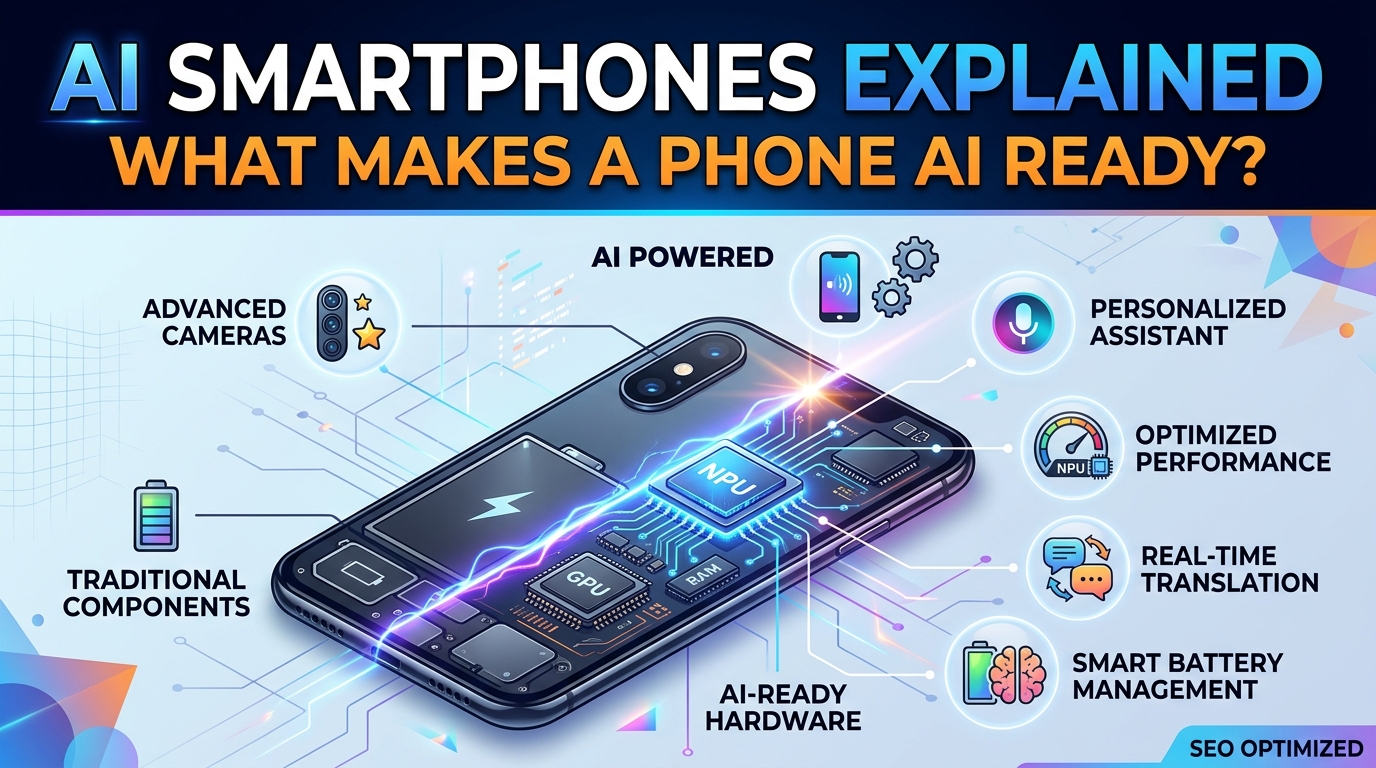
The biggest hardware difference in an AI Ready Phone is the addition of a Neural Processing Unit, known as an NPU. A standard central processor acts like a general worker capable of doing many different tasks adequately. A graphics processor handles visual elements, display rendering, and mobile video games. An NPU is built specifically to process artificial neural networks with extreme speed and minimal battery drain.
Running machine learning models on a regular central processor causes the phone to get hot and drains battery power fast. The NPU handles these heavy mathematical models using a fraction of the electricity. It processes voice commands, image recognition tags, and live text translations in milliseconds. Having a capable NPU is what separates a genuine AI phone from an ordinary smartphone running cloud apps.
On Device Processing Versus Cloud Processing
Knowing the difference between local processing and cloud computing is critical when evaluating new phones. Cloud processing sends your voice recordings, text messages, or photos to massive remote data centers for analysis. The remote server calculates the answer and sends the result back to your screen over mobile networks. While cloud servers are very powerful, they require an active internet connection and create brief delays.
On device processing completes the entire mathematical task locally on your physical handset. When you remove a photo background or transcribe a recorded voice note, no data leaves your device. This local execution protects your personal privacy because your confidential information never travels across public networks. It also guarantees that your favorite smart tools continue to work inside subway tunnels, airplanes, and remote areas.
Hybrid systems combine the best elements of both processing methods to deliver optimal results. Simple daily tasks like live translation and voice typing run locally on the phone hardware for instant speed. Giant creative requests, like generating full art scenes or analyzing large documents, get passed securely to cloud servers. Modern phone software decides automatically which processing path is best for each specific request.
Everyday Smartphone AI Features You Can Use Today
Live voice translation during phone calls is one of the most useful features on modern handsets. When you speak to someone in another language, the phone translates both sides of the conversation in real time. The person on the other end hears translated audio in their native language while you see text on your screen. This capability makes traveling abroad and conducting international business effortless.
Smart photo tools let you fix imperfect snapshots with a single finger tap. You can erase photobombers from your vacation pictures, move objects across the frame, and fill empty backgrounds automatically. The software analyzes surrounding pixels, textures, and lighting angles to make edits look completely natural. You no longer need expert photo editing skills to produce stunning pictures for social media.
Automated text tools help you manage long emails, news articles, and recorded meetings in seconds. The phone can listen to a sixty minute voice recording and generate a bulleted summary of key decisions. It can also rewrite text messages to sound more professional, casual, or concise based on your preference. These features eliminate hours of tedious typing and reading from your workweek.
Hardware Requirements: What Makes a Phone AI Ready?
A truly AI Ready Phone requires specific hardware upgrades beyond just a modern processor. Running large language models directly on a handset demands massive amounts of high speed system memory. Budget devices with four gigabytes of RAM struggle to hold operating systems and smart models in memory simultaneously. Premium AI devices now include twelve or sixteen gigabytes of RAM to ensure smooth multi tasking.
Storage drive speed also plays a critical role in how fast models load and run. Modern phones utilize fast UFS 4.0 storage chips that read and write data at high speeds. When you trigger an image generator or translation tool, the phone loads gigabytes of neural weights into memory instantly. Fast storage prevents lag and keeps user interfaces feeling snappy and responsive.
Advanced thermal cooling hardware is essential to keep the phone running at peak performance. Processing complex neural networks generates heat across the silicon processor. Phone makers install vapor chambers and graphite heat spreaders to move warmth away from internal components quickly. Proper cooling ensures that your phone does not slow down during long photo editing sessions or heavy gaming.
Core Hardware Features of AI Smartphones
- Dedicated Neural Processing Unit capable of handling billions of operations per second
- Generous system RAM measuring at least twelve gigabytes for smooth model execution
- High speed internal storage using UFS 4.0 technology for rapid model loading
- Advanced vapor chamber cooling systems to manage internal component temperatures
- Specialized image signal processors that work alongside neural cores for instant photo tuning
How AI Improves Smartphone Battery Life and Performance
Modern phones contain bright screens, powerful modems, and heavy apps that can drain batteries quickly. Smart battery management systems use predictive machine learning to study how you use your device throughout the day. If you never open social media apps while at work, the phone puts those background processes to sleep automatically. This intelligent power allocation keeps battery life steady from morning until bedtime.
Charging speeds and battery health are also protected by automated software systems. The phone tracks your overnight sleep schedule and pauses charging at eighty percent capacity while you rest. It tops off the remaining twenty percent right before your morning alarm rings. This gentle charging routine reduces chemical stress inside the battery and extends the physical lifespan of your handset.
System performance stays fast over years of ownership thanks to automated background maintenance. The operating system cleans up unused cache files, defragments memory, and allocates processor cores based on active demand. When you launch a demanding game, the phone channels power to graphics cores while throttling unimportant background tasks. Your device maintains that brand new feeling long after you take it out of the box.
Mobile Photography and Video Upgrades Powered by AI
Smartphone camera lenses are physically tiny compared to bulky professional camera lenses. Phone makers overcome these physical size limits using computational photography powered by smart chips. When you press the shutter button, the camera actually captures dozens of rapid frames at different exposure levels. The neural processor combines the best parts of each frame into a single perfectly exposed photo.
Semantic segmentation is a clever technique where the camera identifies individual elements in a scene automatically. The processor recognizes human faces, clothing fabrics, blue skies, green foliage, and background buildings. It applies customized sharpening, color balance, and noise reduction to each specific element separately. Skies look deep blue and skin tones look natural without oversaturating the entire image.
Night photography has seen massive improvements through multi frame neural stacking. In low light, the camera captures steady bursts of light data and removes sensor grain using pattern recognition. It sharpens blurry edges, brightens dark shadows, and balances neon street lights in seconds. You get clear, vibrant night shots without needing a tripod or professional studio lighting.
Privacy and Security: Keeping Your Personal Data Safe
Storing sensitive data on your phone requires strong privacy protections and secure hardware barriers. When software processes your text messages and voice recordings locally, your private data never touches corporate servers. This local processing reduces the risk of identity theft and protects you from data breaches. You retain complete ownership and control over your personal files.
Biometric security systems rely on neural processing to verify user identities quickly and securely. Facial recognition cameras build three dimensional depth maps of your facial features to prevent spoofing with printed photos. Ultrasonic fingerprint readers analyze microscopic skin ridges to confirm your identity in a fraction of a second. These hardware protections keep your banking apps and private messages safe from unauthorized access.
Smart fraud detection protects users from dangerous text scams and incoming spam phone calls. The phone analyzes incoming messages locally and flags suspicious payment links or urgent threats before you click them. It can also screen unknown phone numbers by asking callers to state their purpose before your phone rings. These defensive tools keep your digital life secure without invading your personal privacy.
What to Look for When Buying an AI Ready Phone
Evaluating new phones requires looking past marketing slogans to examine actual technical specifications. Check the processor model to confirm it includes a modern NPU with high operational ratings. Leading chipsets from Qualcomm, Apple, and MediaTek offer dedicated neural engines optimized for mobile tasks. A capable processor ensures that your phone will support new software features released in future updates.
Software update support is another critical factor to consider before spending your money. Major smartphone makers now promise up to seven years of operating system updates and security patches. Choosing a brand with long update commitments guarantees that your device will receive fresh AI tools as technology evolves. You get long term value without needing to upgrade your physical handset every twelve months.
Consider your personal daily usage habits to decide how much smart capability you truly need. If you primarily send text messages and browse web pages, a mid range phone might be completely sufficient. If you edit high resolution videos, travel internationally, or manage complex business projects, a flagship device is worth the investment. Pick a device that solves your specific daily frustrations and fits comfortably within your budget.
Helpful Buyer Checklist for Modern Smartphones
- Choose handsets with long term software update commitments of five years or more
- Prioritize phones with on device processing for sensitive features like translation and photo editing
- Select models with bright displays and large batteries to handle intensive processing workloads
- Verify that the manufacturer provides clear data privacy controls and local storage settings
- Compare real world camera reviews rather than relying purely on raw megapixel numbers
The Future of Smart Mobile Devices
Mobile technology will continue to move toward proactive and context aware personal assistance. Future phones will not wait for you to open applications or type specific search queries. Your device will anticipate what you need based on your location, schedule, and current physical activity. It will prepare transit directions, order morning coffee, or summarize urgent work tasks before you even ask.
Multi modal processing will allow phones to comprehend spoken words, visual images, and physical gestures simultaneously. You will be able to point your camera at a broken bike chain and ask the phone how to fix it. The assistant will highlight the exact parts on your screen while giving you step by step spoken instructions. Interacting with technology will feel as natural and easy as talking to a helpful friend.
Wearable devices like smart rings, watches, and audio glasses will connect seamlessly with your central phone processor. The phone will serve as the computing brain for your personal digital ecosystem. It will process sensor data from your body and surroundings to provide real time health and productivity guidance. The smartphone will remain the central hub of personal computing for years to come.
Upgrade Your Mobile Experience Today
AI Smartphones Explained shows that mobile devices are evolving from simple communication screens into capable personal assistants. The combination of dedicated NPUs, generous memory, fast storage, and on device processing makes modern phones faster and more helpful than ever. You enjoy instant language translation, effortless photo editing, longer battery life, and superior privacy protection.
Do not let confusing technical jargon keep you from enjoying the benefits of modern technology. Review the processor specs, memory capacity, and software update promises before choosing your next handset. Pick an AI Ready Phone that fits your lifestyle, protects your personal data, and simplifies your daily routines. Upgrade your mobile experience today and discover how smart a modern phone can truly be.
About the Author